Parikabpemalang – The handheld PC category, while still young, has already demonstrated remarkable evolution. Early devices established the fundamental concept: portable computers capable of playing the full PC gaming library. Current devices have refined the formula, improving ergonomics, performance, and software integration. The next gen handheld PC, however, promises not refinement but transformation. Advances in processor architecture, display technology, battery chemistry, and software integration are converging to deliver capabilities that will fundamentally redefine what handheld PCs can be.
What is The Next Gen Handheld PC Will Deliver
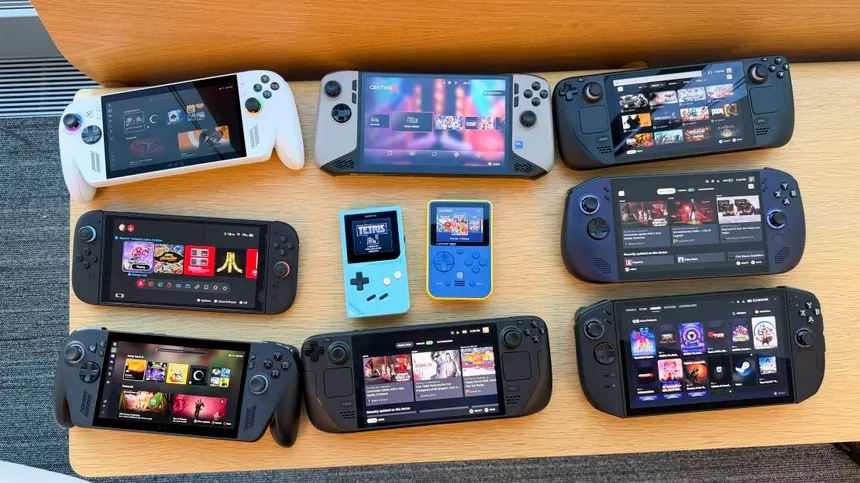
The processor advancements driving the next generation are substantial. Current handheld PCs utilize processors designed for laptops, adapted to the handheld power envelope with varying success. The next wave will feature processors designed explicitly for handheld applications, with thermal and power characteristics optimized for the form factor. These specialized chips will deliver higher performance within the same power budget or equivalent performance with dramatically reduced power consumption. The efficiency gains will translate directly to improved battery life or expanded capability without thermal compromise.
Integrated graphics performance is poised for a generational leap. The gap between integrated and discrete graphics has narrowed with each processor generation, but the next wave will see integrated solutions approaching the performance of current mid-range dedicated graphics cards. This capability will enable handheld PCs to drive higher resolutions, higher refresh rates, and more demanding graphical features without the thermal and power penalties of discrete solutions. The result will be handheld gaming experiences that rival desktop setups of the current generation.
Display technology will see significant advancement in the next generation. OLED displays, currently appearing on premium handheld models, will become standard across the category, offering superior contrast, color accuracy, and power efficiency. High refresh rate displays, currently limited by battery and processing constraints, will become more viable as processor efficiency improves. Variable refresh rate technology will become standard, eliminating screen tearing while optimizing power consumption. The combination of these display advances will deliver visual experiences that surpass what current handheld PCs can provide.
Battery technology improvements, while incremental, will accumulate to deliver meaningful gains. Higher energy density cells will allow greater capacity within the same physical volume, extending playtime for demanding games. Faster charging technology will reduce downtime, with full charges becoming possible in under an hour. Some manufacturers are exploring modular battery designs that would allow users to swap depleted batteries for fresh ones, eliminating charging downtime entirely for extended sessions.
Software integration will reach new levels of sophistication in the next generation. Operating system layers will become seamless, with handheld-optimized interfaces that feel native rather than overlaid. Cloud integration will deepen, with game libraries, settings, and save data synchronizing automatically across devices without user intervention. AI-assisted performance optimization will learn user preferences and automatically configure games for optimal balance of visual quality and battery life. The software experience will approach the polish of dedicated gaming handhelds while maintaining the flexibility of the PC platform.
The connectivity landscape for handheld PCs will expand significantly. Next-generation wireless standards will provide faster, more reliable connections for cloud gaming and multiplayer. 5G integration, currently rare in the category, will become more common, enabling true anywhere connectivity for cloud gaming and online play. Improved Bluetooth implementations will support lower-latency wireless audio and simultaneous connection of multiple peripherals.
The generational leap in handheld PCs will not merely improve existing capabilities but enable entirely new use cases. Devices will serve as primary computing platforms for users who currently maintain separate desktop and portable systems. The performance envelope will expand to include demanding productivity workloads, creative applications, and virtual reality experiences previously impossible in handheld form. The convergence of hardware advancement and software maturity will deliver devices that fulfill the original promise of handheld PCs: truly portable computers that compromise nothing in capability.